

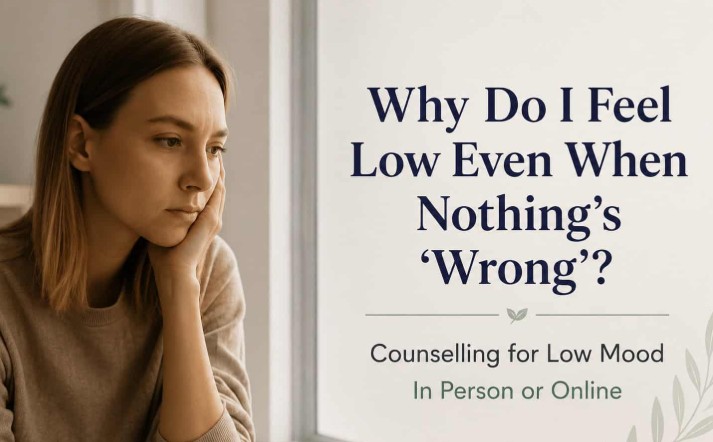
Everyone has days when they feel unhappy, tired or unmotivated. A disappointing experience, an argument or a stressful week can naturally affect our mood. Usually, these feelings improve as circumstances change.
Sometimes, however, low mood lasts longer or begins affecting several areas of everyday life.
You might find that activities you previously enjoyed no longer feel appealing. Getting out of bed can become more difficult, social invitations may be declined and everyday responsibilities can require considerably more effort than they once did.
Other people may notice changes before you recognise them yourself. Friends might comment that you seem quieter, while family members may notice that you are spending more time alone.
Low mood can also affect how people think about themselves.
Someone who is struggling may become increasingly critical of their appearance, abilities or achievements. Small mistakes can feel disproportionately important, while positive experiences may be dismissed or overlooked.
This can create a cycle where negative thoughts contribute to low mood, and low mood makes negative thoughts feel increasingly convincing.
Speaking openly about how you feel can be helpful.
Those seeking professional counselling in Nottingham can use counselling as an opportunity to explore difficult emotions, understand experiences that may be contributing to them and consider ways of improving emotional wellbeing.
One advantage of speaking with a counsellor is independence.
People sometimes hide how they are feeling from friends or relatives because they do not want to worry them. Others believe that they should be able to solve their difficulties themselves.
A confidential counselling environment provides space to discuss thoughts that may be difficult to express elsewhere.
Counselling can also help you identify patterns.
Perhaps your mood tends to decline when work becomes particularly demanding. You may notice that relationship difficulties trigger feelings of insecurity, or that you have gradually stopped participating in activities that previously provided enjoyment and social connection.
Recognising these connections can be useful when considering what might help.
Small changes can sometimes have a meaningful impact. Regular physical activity, maintaining a consistent sleep routine, eating properly and staying connected with supportive people can all contribute to wellbeing.
However, when motivation is low, even straightforward activities can feel difficult. Setting small, achievable goals can therefore be more realistic than attempting major lifestyle changes immediately.
It is also important not to compare your emotional difficulties with those of other people.
You do not have to prove that your situation is sufficiently serious before seeking support. If the way you feel is affecting your quality of life, relationships or ability to function normally, it deserves attention.
Persistent low mood should also be taken seriously, particularly if it is becoming more intense or significantly affecting everyday life. Appropriate professional support can help you better understand what you are experiencing.
Talking to someone does not mean every difficulty will disappear immediately. Counselling is usually a process that develops over time.
However, having the opportunity to explore how you feel, recognise unhelpful patterns and consider possible changes can provide a useful starting point.
Sometimes the most important first step is simply acknowledging that things have become difficult and deciding that you do not have to work through everything alone