

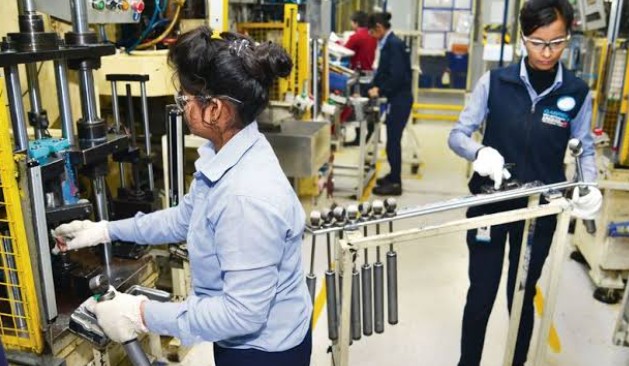
For much of the past few decades, governments in major economies generally preferred to let markets decide where factories were built, which technologies attracted investment and how supply chains were organized. That approach is changing. Across the United States, Europe and parts of Asia, policymakers are once again using subsidies, tax credits, procurement rules and direct investment to encourage activity in sectors they consider strategically important. In Kavan Choksi’s view, the return of industrial policy is one of the more significant shifts in the relationship between government and business because it is being driven by concerns that extend well beyond simple economic growth.
The new emphasis is partly a response to what recent disruptions exposed. Global supply chains were designed for efficiency, but efficiency can create vulnerability when production becomes heavily concentrated in a small number of countries or regions. Shortages of semiconductors, medical equipment and other critical goods demonstrated how quickly a disruption in one part of the world could affect factories and consumers elsewhere.
Governments are now trying to reduce that exposure by encouraging more domestic production or by shifting strategically important supply chains toward countries considered politically and economically reliable.
That does not mean globalization is ending. It does mean that resilience is increasingly being valued alongside cost.
Semiconductors Show How the Priorities Have Changed
Few industries illustrate the shift better than semiconductors.
Advanced chips sit at the center of modern manufacturing, telecommunications, artificial intelligence, defense systems and consumer technology. Yet production of the most sophisticated chips is concentrated in a relatively small number of locations. That concentration has turned what might once have been viewed as an industry issue into a national economic and security concern.
Governments have responded by offering substantial incentives to companies willing to build fabrication plants domestically. These facilities are extremely expensive, technically complex and slow to construct, so public support can influence whether an investment is considered commercially viable.
The objective is not necessarily to make every country self-sufficient. That would be unrealistic in such a complex industry. The goal is to reduce dependence on a small number of critical suppliers and create enough domestic or allied capacity to make the system more resilient.
Similar thinking is appearing in batteries, renewable energy equipment, pharmaceuticals and critical minerals.
Subsidies Can Move Investment
Industrial policy changes the economics of corporate decisions.
A factory that would normally be built in the lowest-cost location may become more attractive elsewhere if tax credits, infrastructure support or grants substantially reduce the cost of investment. Companies can end up choosing between jurisdictions not simply on wages and logistics, but on the package of incentives available.
This creates competition between governments as well as between businesses.
One country offers manufacturing tax credits. Another provides cheap land, energy support or direct grants. A third may promise faster permitting or investment in surrounding infrastructure.
For companies, these incentives can alter expected returns. For taxpayers, the harder question is whether the investment would have happened anyway.
That distinction matters. If a government spends billions encouraging a company to build a facility that was already likely to be built, the economic benefit of the subsidy may be limited. If the support attracts an entirely new industry, creates a supplier network and generates long-term employment, the calculation looks different.
Industrial policy therefore depends heavily on execution.
The Supply Chain Effect Can Be Larger Than the Factory
A major manufacturing project rarely exists in isolation.
A semiconductor plant may require specialist chemicals, machinery, construction, logistics and engineering services. A battery factory needs materials, power and transportation infrastructure. Once a large anchor investment arrives, suppliers may have an incentive to locate nearby.
This clustering effect can be one of the strongest arguments for targeted industrial policy.
The initial project may create a relatively limited number of direct jobs compared with the amount invested, but the surrounding economic activity can be much broader. Suppliers hire staff, infrastructure improves and local skills develop. Over time, a region may become more attractive for additional investment simply because the necessary ecosystem already exists.
That is how industrial clusters become difficult to replicate.
However, the process can work in reverse if projects fail to attract enough supporting businesses. Governments can spend heavily on a flagship investment without creating the broader economic transformation they expected.
There Is a Cost to Resilience
The return of industrial policy also raises an uncomfortable point: greater resilience can be more expensive.
Companies spent decades optimizing supply chains to reduce costs. Production moved to locations with lower wages, established supplier networks or economies of scale. Bringing some of that activity closer to home may improve security, but it can also increase production costs.
Governments may decide that this is a price worth paying.
The economic argument is similar to insurance. A system designed solely around the cheapest available supplier can perform extremely well until that supplier becomes unavailable. Building alternative capacity looks inefficient during normal periods, but it can become valuable during a crisis.
The challenge is deciding how much redundancy is sensible.
Too little leaves the economy exposed. Too much risks wasting resources on expensive domestic production that struggles to compete without permanent government support.
There is no simple answer, particularly when strategic and economic objectives overlap.
Industrial Policy Can Create Winners and Losers
Government support inevitably changes competitive conditions.
Companies receiving subsidies can gain an advantage over rivals that do not. Regions attracting new factories may benefit from employment and investment, while others lose projects they might previously have won on cost alone.
Trade partners can respond with their own incentives, potentially creating a subsidy race.
That has already become a concern in areas such as clean energy and advanced manufacturing. If every major economy offers increasingly generous support to attract the same industries, public spending can rise dramatically without necessarily increasing global demand.
At the same time, countries that cannot afford large incentive programs may find it harder to compete for high-value investment.
This could gradually reshape global trade patterns.
Rather than production flowing primarily toward the lowest-cost location, more investment may be directed toward countries with strategic importance, political stability and generous policy support.
Security and Economics Are Becoming Harder to Separate
Perhaps the biggest change is philosophical.
Economic policy and national security policy are becoming increasingly intertwined.
Energy supply, semiconductor manufacturing, critical minerals and communications infrastructure are now commonly discussed in strategic terms. Governments are asking not only whether a supply chain is efficient, but whether it can be relied upon during geopolitical tension.
That changes the way investment decisions are judged.
A project may not produce the highest immediate financial return, yet policymakers can still view it as worthwhile because it reduces dependence on an external supplier. The benefits are partly economic and partly strategic, which makes them harder to measure using traditional cost-benefit analysis.
This is likely to remain a feature of policymaking for some time.
Geopolitical tensions, technological competition and the experience of recent supply disruptions have all reduced confidence in the idea that markets alone will always deliver the level of resilience governments want.
What Investors Should Watch
For investors, industrial policy creates opportunities, but it also creates complexity.
Subsidies can improve the economics of projects that might otherwise be marginal. Infrastructure spending can benefit suppliers and regional economies. Companies operating in strategically important sectors may receive policy support for many years.
But government backing does not guarantee commercial success.
A subsidized factory still needs customers. A protected industry still needs to remain competitive. Policy priorities can change after elections, and incentives can be reduced or redesigned.
The strongest investment cases are therefore likely to be those where government support reinforces genuine demand rather than substitutes for it.
That distinction will matter increasingly as public money flows into strategic industries.
Industrial policy has returned because governments are trying to solve a different problem from the one that dominated the era of globalization. Cost and efficiency still matter, but resilience, security and control over critical technologies now matter too.
The result is a global economy in which governments are once again helping decide not just how much investment takes place, but where it goes and which industries receive the greatest support.


